
Post
10 Amazing Facts About Bayern Munich: Germany’s Greatest Football Club
May
10 Amazing Facts About Bayern Munich: Germany’s Greatest Football Club
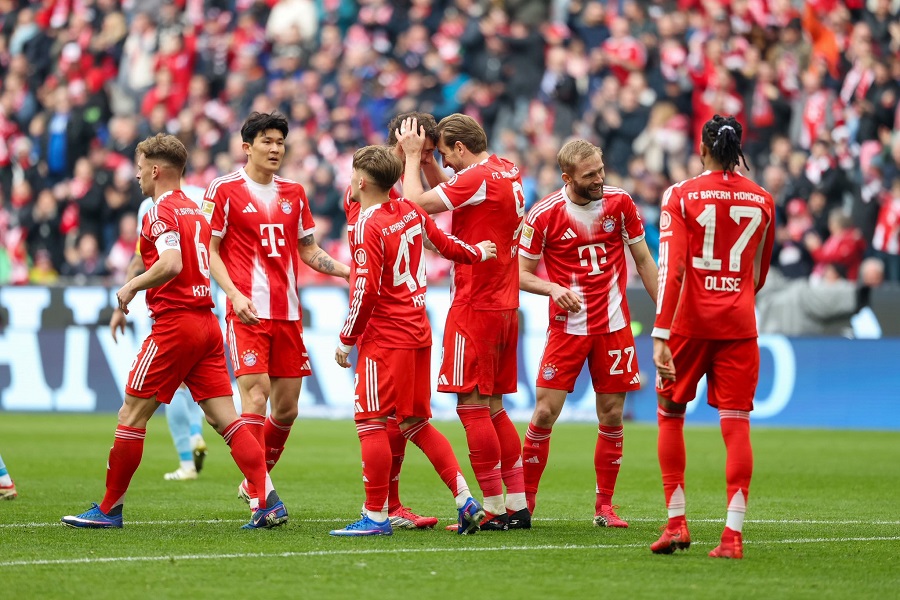
When people talk about European football royalty, few clubs command as much respect as Bayern Munich. Known globally as Bayern Munich or simply Bayern, the German giants have built a reputation based on success, consistency, and world-class football. From dominating the Bundesliga to lifting the UEFA Champions League trophy multiple times, the club is more than just a football team — it is a symbol of excellence, ambition, and tradition.
Founded more than a century ago, the club has grown into one of the most successful and recognizable football brands in the world. With legendary players, iconic managers, and unforgettable moments, they continue to inspire millions of supporters across every continent. For football lovers, the club represents the absolute pinnacle of German sports engineering, combining financial stability with a relentless elite winning culture.
1. The Historic Foundation and Early Triumphs
The club was officially founded on February 27, 1900, by a group of football enthusiasts led by Franz John in Munich, Germany. Although the club did not immediately dominate German football, its steady growth throughout the early 20th century transformed it into a regional powerhouse.
The club’s first major national success came in 1932 when they won their very first German championship. However, the true rise of modern football dominance began during the 1960s and 1970s. This spectacular era introduced legendary names who helped establish the club’s permanent identity. While other top leagues rely heavily on massive foreign billionaire investments, as highlighted in our comprehensive guide to La Liga structures, the German giants built their global empire on strict internal financial discipline and local talent growth.

2. The Spectacular Golden Era of the 1970s
During the mid-1970s, the club achieved international immortality by winning the European Cup (now known as the UEFA Champions League) three consecutive times in 1974, 1975, and 1976. This incredible achievement firmly established the German side as an absolute superpower in European sports history.
The squad was anchored by a legendary spine of players who also formed the core of the World Cup-winning West Germany national team. Their revolutionary tactical setups, physical conditioning, and unmatched mental resilience under pressure during this decade set a brand-new benchmark for professional football clubs worldwide, creating a legendary blueprint that modern teams still attempt to replicate today.
3. The Revolutionary 50+1 Ownership Rule
A highly unique and vital characteristic of the club’s administrative structure is its strict adherence to German football’s famous 50+1 rule. This regulation dictates that the club’s registered members must hold the majority of voting rights, effectively preventing external commercial billionaires or foreign states from taking complete control of the institution.
This structural model ensures that the passionate fans remain the true heart of the club, keeping ticket prices highly affordable and preserving the traditional matchday culture. Despite operating without individual billionaire owners, the club’s elite commercial management has turned it into one of the most financially stable and profitable sports organizations in human history.
4. Iconic Stadiums and the Breathtaking Allianz Arena
The club’s stadium history reflects its massive growth from a local sports team into a multi-million-dollar global brand. Today, they play their home matches in one of the most technologically advanced and architecturally stunning venues in the world:
| Historical Era | Stadium Venue Name | Primary Architectural & Fan Feature |
|---|---|---|
| 1972 – 2005 | Olympiastadion Munich | Famous sweeping tent-like roof built for the 1972 Summer Olympic Games |
| 2005 – Present | Allianz Arena | Futuristic exterior plastic panels that illuminate fully in vibrant red for home matches |
| Matchday Experience | Südkurve Stand | The passionate home terrace where hardcore supporters generate intense walls of sound |
5. Legendary Icons Who Defined the Club’s Greatness
The club’s unmatched historical legacy has been carefully sculpted by some of the absolute greatest footballing geniuses to ever play the sport, earning them the nickname “FC Hollywood” due to their star-studded rosters.
Franz Beckenbauer – Der Kaiser
Franz Beckenbauer is universally regarded as one of the most influential figures in football history. He completely revolutionized the modern “sweeper” or libero defensive role, captaining the club to continental dominance before serving successfully as club president.
Gerd Müller – The Ultimate Goal Machine
Gerd Müller remains the most lethal penalty-box forward in German football history. His astonishing goal-scoring statistics and unmatched clinical instincts allowed him to break numerous domestic records that stood completely untouched for many decades.
6. Der Klassiker: The Fierce Domestic Rivalry
The absolute pinnacle of the German domestic football calendar is “Der Klassiker,” the intense competitive rivalry between the Munich giants and Borussia Dortmund. These high-stakes matches consistently decide the destination of domestic trophies and attract massive global television audiences.
The competitive rivalry reached an iconic peak in 2013 when both clubs successfully advanced to the first-ever all-German UEFA Champions League final match at Wembley Stadium, where Arjen Robben scored a dramatic last-minute winning goal to secure a historic continental treble for the Bavarian heavyweights.
7. The Famous Mia San Mia Club Philosophy
The entire operational culture of the organization is driven by the famous Bavarian phrase, “Mia San Mia,” which translates literally to “We Are Who We Are” in English. This philosophy represents extreme self-belief, a relentless pursuit of sports excellence, and a deep responsibility to honor the club’s rich history.
It creates a unique psychological environment where second place is universally viewed as an absolute failure, pushing players, coaches, and staff members to constantly innovate and maintain world-class standards across every single competitive fixture throughout the ten-month season.
8. World-Class Youth Academy Development
While the club possesses the immense financial power to buy top international superstars, its core foundation relies heavily on its elite youth development systems. Their specialized academies have successfully developed numerous world champions, including Bastian Schweinsteiger, Philipp Lahm, and Thomas Müller. To view official technical rosters, corporate statements, and authorized recent club news, you can visit the official FC Bayern global portal to read verified organizational documentation.
Frequently Asked Questions
How many Bundesliga titles has the club won?
The club is by far the most successful team in German football history, holding the record for the most Bundesliga titles, including an unprecedented streak of consecutive championships.
Has the club ever achieved a continental treble?
Yes, the club has achieved the historic continental treble (winning the Bundesliga, DFB-Pokal, and UEFA Champions League in a single season) twice, first in 2013 under Jupp Heynckes and again in 2020 under Hansi Flick.
What does the nickname “FC Hollywood” mean?
The nickname was historically given to the club during the 1990s when the team featured highly opinionated superstar players who frequently generated massive entertainment headlines in the media.
Conclusion
In summary, Bayern Munich stands as an absolute monument to sporting perfection, financial stability, and traditional football culture. Through its rich history, iconic stadiums, unique fan ownership models, and legendary individual playmakers, it continues to set the absolute gold standard for football clubs globally. As the organization modernizes its global brand expansion and integrates next-generation international talents, the legendary red shirts will undoubtedly keep dominating the peak of European football for many generations to come.
